Beauty beyond limits — perfected by science
The science

No claim. Only evidence.

We do not follow trends. We formulate with actives that have research behind them, we tell you how much of each formula they make up, and we show you the studies, sources included.

6active families
11studies summarised
4placebo-controlled
12sources listed
Our method

Three rules we never break.

Every Derma Global formula is built, labelled and described the same way.

01 — Science first

Start with the active

Each formula is built around ingredients developed and studied by specialist laboratories, rather than around a story.

02 — Transparent

Say how much

The concentration is on the front of every pack, with the headline actives named beside it.

03 — Honest

Promise less

Research on an ingredient is not a guarantee for a person. We describe what our formulas contain and how to use them, and we say plainly that results vary.

The research library

Every active. Every study.

What each ingredient is, what its maker studied, and where you will find it in our range. Open any one for the full research and its sources.

Plant-derived DHQG and EGCG2 with glycine and zinc
01Rd
Follicle activity

Redensyl®

Givaudan Active Beauty (originally Induchem), Switzerland

According to Givaudan, DHQG targets the stem cells in the bulge of the hair follicle, helping them divide and move towards the growth (anagen) phase, while EGCG2 calms the scalp inflammation marker IL-8. Glycine is a building block of hair proteins and zinc supports keratin formation.

Key finding · Clinical · double-blind vs placebo

The share of hairs in the growth phase rose by 9% and the share in the resting phase fell by 17% versus the start, with the placebo showing almost no change after month 1. Hair density rose by an average of 8%. 71% of users were satisfied.

Pea sprout extract (Pisum sativum)
02An
Growth-phase support

Anagain®

Mibelle Biochemistry, Switzerland

According to Mibelle, the extract switches on two signals made by the dermal papilla at the base of the follicle: FGF7, which tells hair cells to start a new growth cycle, and noggin, which shortens the resting phase.

Key finding · Clinical · phototrichogram

Resting-phase (telogen) hair density fell by 28.3% and growth-phase (anagen) density rose by 7.9%. The anagen-to-telogen ratio improved from 4 to 7.2. 95% noticed less hair loss.

Baikal skullcap with soy and wheat sprout extracts
03Bc
Density and less shedding

Baicapil™

Provital, Spain

According to Provital, baicalin protects follicle cells from oxidative damage and helps keep stem cells active, while the soy and wheat sprouts boost cell growth and energy.

Key finding · Clinical · vs placebo

The anagen-to-telogen ratio rose by 68.6% with Baicapil versus 3.6% with placebo (6 months). Hair loss fell by 60.6% with Baicapil versus 37.8% with placebo (3 months).

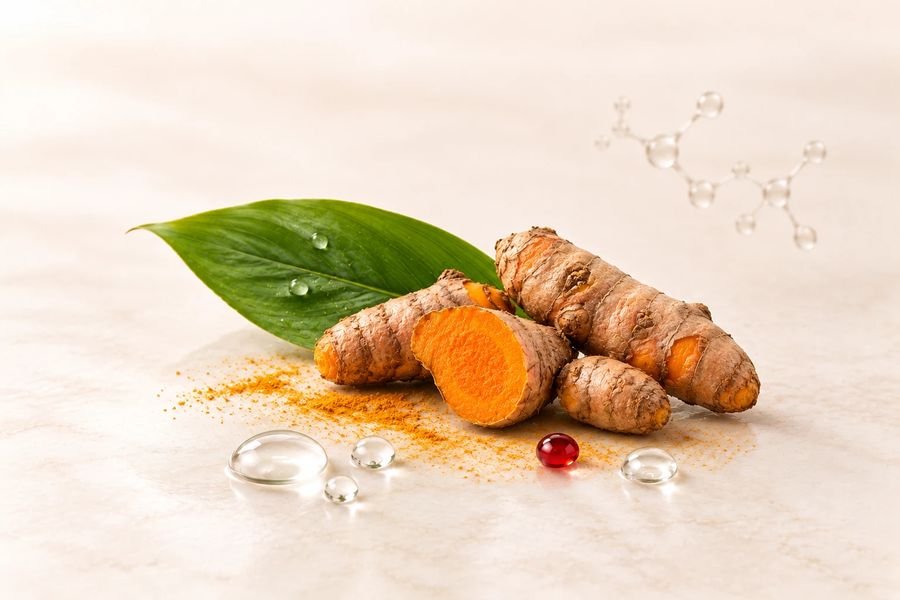
Derived from turmeric (Curcuma longa)
04Cl
Fuller-looking density

Capilia Longa

Vytrus Biotech, Spain

According to Vytrus, it reawakens dormant dermal papilla cells, the cells at the base of the follicle that drive hair growth, and supports the growth signal IGF-1.

Key finding · Clinical · double-blind

After 150 days, hair loss fell by 57% on average and hair density rose by 17% on average; the anagen-to-telogen ratio rose by 27%.

Biotinoyl tripeptide-1, apigenin and oleanolic acid
05Pc
Anchoring at the root

Procapil™

Sederma (part of Croda), France

According to Sederma, the peptide boosts the metabolism of follicle cells, apigenin supports micro-circulation and oleanolic acid limits the enzyme 5α-reductase. Together they help anchor hair firmly in the follicle.

Key finding · Clinical · men vs placebo

The average anagen-to-telogen ratio went from 2.84 to 3.13 with Procapil, and from 2.61 to 2.54 with placebo.

Myristoyl pentapeptide-17, acetyl tetrapeptide-3 and biotinoyl tripeptide-1
06Pp
Lash conditioning

Multi-peptide complex

Specialist peptide makers, including Sederma (biotinoyl tripeptide-1)

Peptides act as messengers between cells. Myristoyl pentapeptide-17 and acetyl tetrapeptide-3 are widely used in lash and hair care to support the follicle, and biotinoyl tripeptide-1 is the same follicle-energising peptide found in Procapil™. Lashious uses this peptide complex instead of prostaglandin analogues, the drug-like lash-growth compounds whose safety in cosmetics the EU Scientific Committee on Consumer Safety reviewed in its opinion SCCS/1680/25 (February 2026).

Plant-derived DHQG and EGCG2 with glycine and zinc
Rd
Follicle activity

Redensyl®

Developed by
Givaudan Active Beauty (originally Induchem), Switzerland
INCI name
Water, Glycerin, Sodium Metabisulfite, Glycine, Larix Europaea Wood Extract, Zinc Chloride, Camellia Sinensis Leaf Extract
Maker's suggested level
1–3%

Source

Plant extracts refined with biotechnology. DHQG is a stabilised polyphenol from European larch wood; EGCG2 is a stabilised derivative of green tea EGCG. Glycine and zinc complete the complex.

How it works

According to Givaudan, DHQG targets the stem cells in the bulge of the hair follicle, helping them divide and move towards the growth (anagen) phase, while EGCG2 calms the scalp inflammation marker IL-8. Glycine is a building block of hair proteins and zinc supports keratin formation.

The research

Clinical · double-blind vs placebo

26 men aged 18–70 with grade 3–4 hair loss applied a lotion with 3% Redensyl or a placebo to the whole scalp daily for 3 months (phototrichogram).

The share of hairs in the growth phase rose by 9% and the share in the resting phase fell by 17% versus the start, with the placebo showing almost no change after month 1. Hair density rose by an average of 8%. 71% of users were satisfied.

Ex vivo · human hair follicles

Hair follicles from four men with hair loss were kept alive in culture with 1% Redensyl or 1% minoxidil for 10 days.

Follicle growth was +214% versus untreated follicles; minoxidil 1% gave +118%.

In vitro · cell studies

Follicle stem cells treated with DHQG; stressed skin cells treated with EGCG2.

DHQG roughly doubled markers of stem-cell identity (K15) and cell survival (BCL2) and more than tripled β-catenin, a growth-phase signal. EGCG2 reduced IL-8 release by 21%.

In Derma Global

These studies were carried out on the ingredient by its manufacturer, not on Derma Global products. Results are as reported by the source. Derma Global products are cosmetics, and individual results vary. The clinical study is small and was run by the supplier; it has not been published in a peer-reviewed journal.

Sources

  1. Givaudan Active Beauty, Redensyl™ technical leaflet (LEAFLET-REDENSYL-06.20)https://cdn.shopify.com/s/files/1/0696/1253/6098/files/Redensyl.pdf
  2. Givaudan, Redensyl™ product pagehttps://www.givaudan.com/fragrance-beauty/active-beauty/products/redensyl
Pea sprout extract (Pisum sativum)
An
Growth-phase support

Anagain®

Developed by
Mibelle Biochemistry, Switzerland
INCI name
Pisum Sativum (Pea) Sprout Extract
Maker's suggested level
2–4%

Source

A water-soluble extract of organic pea sprouts harvested a few days after germination, when the young shoots are richest in protective plant compounds.

How it works

According to Mibelle, the extract switches on two signals made by the dermal papilla at the base of the follicle: FGF7, which tells hair cells to start a new growth cycle, and noggin, which shortens the resting phase.

The research

Clinical · phototrichogram

20 volunteers (17 women, 3 men) aged 21–37 with increased hair loss applied a gel with 4% AnaGain twice daily for 12 weeks. No placebo group.

Resting-phase (telogen) hair density fell by 28.3% and growth-phase (anagen) density rose by 7.9%. The anagen-to-telogen ratio improved from 4 to 7.2. 95% noticed less hair loss.

Clinical · gene expression (peer reviewed)

10 volunteers (4 women, 6 men) aged 46–60 applied a scalp product with 2% AnaGain twice daily for 2 weeks; plucked hairs were analysed.

FGF7 expression rose by 56% and noggin by 85% on average. FGF7 increased in 8 and noggin in 7 of the 10 volunteers.

In Derma Global

These studies were carried out on the ingredient by its manufacturer, not on Derma Global products. Results are as reported by the source. Derma Global products are cosmetics, and individual results vary. The studies were sponsored by Mibelle; the gene-expression study is published in Phytotherapy Research (2020).

Sources

  1. Schmid, Belser, Zülli. The FGF7 and Noggin genes are key targets to treat hair loss. SOFW Journal 139, 9-2013https://mibellebiochemistry.com/media/449/download
  2. Grothe, Wandrey, Schuerch. Clinical evaluation of pea sprout extract in the treatment of hair loss. Phytotherapy Research 2020;34:428–431https://pmc.ncbi.nlm.nih.gov/articles/PMC8246764
  3. Mibelle Biochemistry, AnaGain™ product pagehttps://mibellebiochemistry.com/anagaintm
Baikal skullcap with soy and wheat sprout extracts
Bc
Density and less shedding

Baicapil™

Developed by
Provital, Spain
INCI name
Scutellaria Baicalensis Root Extract with soy and wheat sprout extracts
Maker's suggested level
2–4%

Source

A combination of three plants: Baikal skullcap root, the source of the active molecule baicalin, plus soy and wheat sprouts, which supply sugars that fuel the hair follicle.

How it works

According to Provital, baicalin protects follicle cells from oxidative damage and helps keep stem cells active, while the soy and wheat sprouts boost cell growth and energy.

The research

Clinical · vs placebo

61 men and women aged 18–60. Half applied a lotion with 3% Baicapil and half a placebo lotion, for 6 months.

The anagen-to-telogen ratio rose by 68.6% with Baicapil versus 3.6% with placebo (6 months). Hair loss fell by 60.6% with Baicapil versus 37.8% with placebo (3 months).

In Derma Global

These studies were carried out on the ingredient by its manufacturer, not on Derma Global products. Results are as reported by the source. Derma Global products are cosmetics, and individual results vary. The study was run by the supplier and has not been published in a peer-reviewed journal.

Sources

  1. Provital, Baicapil™ technical leaflet (V01-2013)https://biotechnologia.pl/uploads/biotechnologia/product/leaflet/675879/Baicapil_hairgrowth_eng.pdf
  2. Provital, Baicapil™ product pagehttps://www.weareprovital.com/en/careactives/baicapil
Derived from turmeric (Curcuma longa)
Cl
Fuller-looking density

Capilia Longa

Developed by
Vytrus Biotech, Spain
INCI name
Curcuma Longa (Turmeric) Callus Conditioned Media
Maker's suggested level
0.5–2%

Source

Grown, not harvested: turmeric (Curcuma longa) cells are cultivated in a lab culture, and the signalling factors they release are concentrated into the active. No turmeric fields are needed.

How it works

According to Vytrus, it reawakens dormant dermal papilla cells, the cells at the base of the follicle that drive hair growth, and supports the growth signal IGF-1.

The research

Clinical · double-blind

40 men and women aged 18–60 with hair loss of different causes applied 1% Capilia Longa to the scalp once a day, with checks at 45, 90 and 150 days.

After 150 days, hair loss fell by 57% on average and hair density rose by 17% on average; the anagen-to-telogen ratio rose by 27%.

In vitro · dermal papilla cells

Human dermal papilla cells incubated with the active for 48 hours.

Cell growth reached up to 177% of untreated cells, compared with 169% for minoxidil.

In Derma Global

These studies were carried out on the ingredient by its manufacturer, not on Derma Global products. Results are as reported by the source. Derma Global products are cosmetics, and individual results vary. The data come from the supplier, as reported by Cosmetics Business; the study has not been published in a peer-reviewed journal.

Sources

  1. Cosmetics Business, Vytrus Biotech unveils Capilia Longa (2016)https://cosmeticsbusiness.com/vytrus-biotech-unveils-capilia-longa-the-hair-3d-bio-printer-123105
  2. Vytrus Biotech, Capilia Longahttps://www.vytrus.com/natural-active/capilia-longa/
Biotinoyl tripeptide-1, apigenin and oleanolic acid
Pc
Anchoring at the root

Procapil™

Developed by
Sederma (part of Croda), France
INCI name
Apigenin, Oleanolic Acid, Biotinoyl Tripeptide-1 (in Butylene Glycol, Water, PPG-26-Buteth-26, PEG-40 Hydrogenated Castor Oil)
Maker's suggested level
3%

Source

A biotin-linked peptide (biotinoyl tripeptide-1) combined with two plant compounds: apigenin, a natural flavonoid, and oleanolic acid of natural origin.

How it works

According to Sederma, the peptide boosts the metabolism of follicle cells, apigenin supports micro-circulation and oleanolic acid limits the enzyme 5α-reductase. Together they help anchor hair firmly in the follicle.

The research

Clinical · men vs placebo

35 men with hair loss applied a lotion with 3% Procapil (18) or a placebo (17) twice daily for 4 months (videotrichogram).

The average anagen-to-telogen ratio went from 2.84 to 3.13 with Procapil, and from 2.61 to 2.54 with placebo.

Clinical · women vs placebo

42 women with grade 1–2 female-pattern hair loss massaged in a serum with 3% Procapil (21) or a placebo (21) at least three times a week for 4 months.

The average anagen-to-telogen ratio went from 5.08 to 9.57 with Procapil, and from 4.85 to 6.17 with placebo.

Ex vivo · human hair follicles

Hair follicles cultured for 14 days with the peptide (biotinyl-GHK) or minoxidil at 2 ppm.

Growth was +66% for both the peptide and minoxidil at 2 ppm, and +92% for the peptide at 5 ppm. Anchoring proteins laminin 5 and collagen IV increased.

In Derma Global

These studies were carried out on the ingredient by its manufacturer, not on Derma Global products. Results are as reported by the source. Derma Global products are cosmetics, and individual results vary. The studies were run by the supplier; small panels, not published in a peer-reviewed journal.

Sources

  1. Sederma, Procapil® product sheet and claim substantiation (2016)https://cdn.shopify.com/s/files/1/1083/0276/files/SEDERMA_Procapil_Product_Overview_Sheet_EN.pdf?663

Myristoyl pentapeptide-17, acetyl tetrapeptide-3 and biotinoyl tripeptide-1
Pp
Lash conditioning

Multi-peptide complex

Developed by
Specialist peptide makers, including Sederma (biotinoyl tripeptide-1)
INCI name
Myristoyl Pentapeptide-17, Acetyl Tetrapeptide-3, Biotinoyl Tripeptide-1

Source

Lab-made peptides: short chains of amino acids, the same building blocks as the keratin in lashes. In Lashious they are combined with Anagain™ pea sprout extract and red clover flower extract.

How it works

Peptides act as messengers between cells. Myristoyl pentapeptide-17 and acetyl tetrapeptide-3 are widely used in lash and hair care to support the follicle, and biotinoyl tripeptide-1 is the same follicle-energising peptide found in Procapil™. Lashious uses this peptide complex instead of prostaglandin analogues, the drug-like lash-growth compounds whose safety in cosmetics the EU Scientific Committee on Consumer Safety reviewed in its opinion SCCS/1680/25 (February 2026).

In Derma Global

These studies were carried out on the ingredient by its manufacturer, not on Derma Global products. Results are as reported by the source. Derma Global products are cosmetics, and individual results vary. Published study figures for these peptides in lash use are limited, so we do not quote numbers here.

Sources

  1. Sederma, Procapil® product sheet (biotinoyl tripeptide-1)https://cdn.shopify.com/s/files/1/1083/0276/files/SEDERMA_Procapil_Product_Overview_Sheet_EN.pdf?663

  2. European Commission, SCCS opinion on prostaglandin analogues in cosmetics (SCCS/1680/25)https://health.ec.europa.eu/publications/sccs-prostaglandin-analogues-methylamido-dihydro-noralfaprostal-mdn-isopropyl-cloprostenate-ipcp_en
How they work together

Three jobs, one hair cycle.

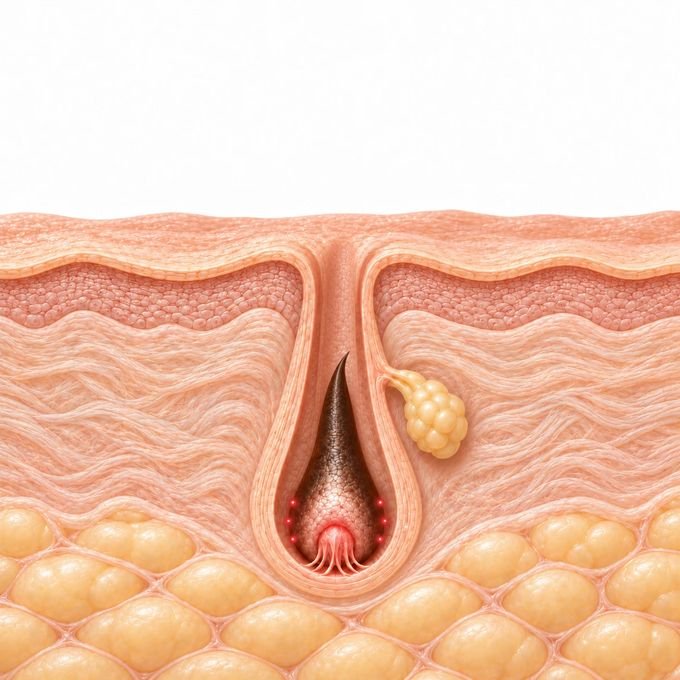
Hair grows in cycles. Our hair formulas pair actives that address different moments of that cycle, instead of repeating one idea at a higher dose.

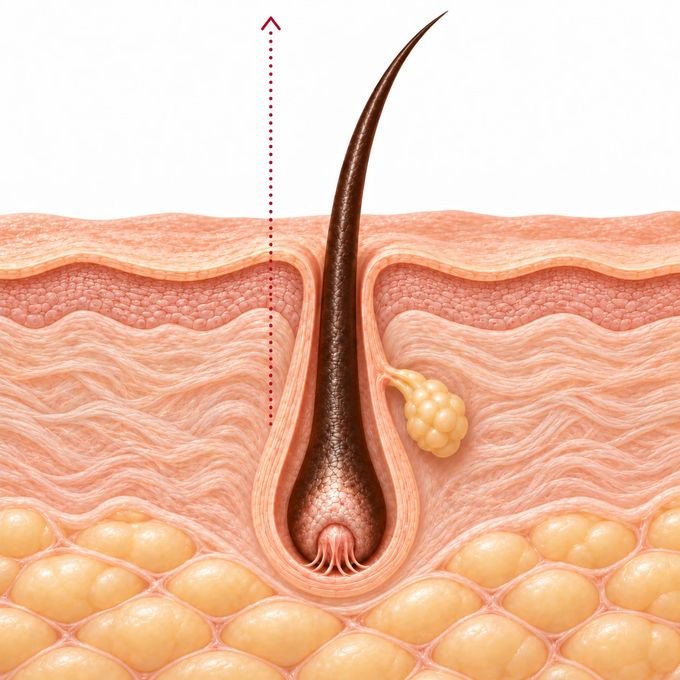
  1. Cross-section of a hair follicle with the base glowing as a new growth cycle begins
    01

    Activate wake the follicle

    New growth starts with the cells at the base of the follicle.

  2. Cross-section of a hair follicle with a long hair growing upward
    02

    Grow support the growth phase

    The longer a hair stays in its growth phase, the fuller the head of hair looks.

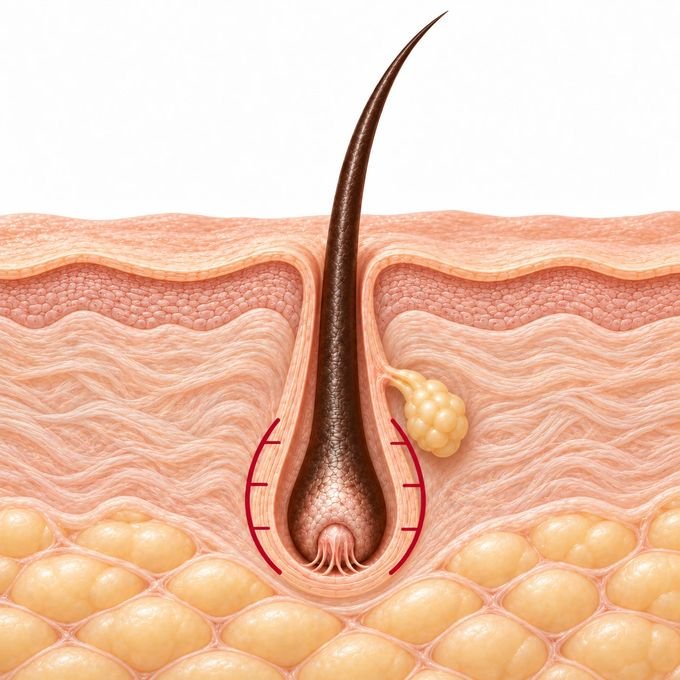
  3. Cross-section of a hair follicle held firmly at the root
    03

    Anchor hold on at the root

    A well-anchored hair is less likely to fall before its time.

Reading the research

Six terms that make it simple.

Ingredient studies use a few technical words. Here is what they mean, so you can judge the evidence for yourself.

01In vitro
Tested on cells in a lab dish. Useful for showing how an ingredient works, but not proof of a visible result on a person.
02Ex vivo
Tested on real human hair follicles kept alive in the lab after donation. One step closer to the scalp than cell studies.
03Clinical
Tested on volunteers who apply a product for weeks or months, measured with photos of the scalp (phototrichogram) or hair counts.
04Placebo-controlled
Half the volunteers use the same base without the active. Comparing the two groups shows what the active itself adds.
05Anagen : telogen ratio
Growing hairs divided by resting hairs. A higher ratio means more of your hair is in its growth phase.
06Concentration
How much of an active is in the formula. Studies test a specific level, which is why we print ours on the front of the pack.

Research summaries describe studies of each ingredient carried out or reported by the company that developed it, not tests on Derma Global finished products. Derma Global products are cosmetics, and individual results vary. Anagain™, Baicapil™, Procapil™, Redensyl® and Capilia Longa are trademarks of their respective owners and are named here to identify the ingredients used.

Consistency is the key

Not a quick fix. A daily habit.

Hair, beard and lashes grow in slow cycles. Use a product as directed for about 90 days before you judge it.

Shop the range

Chat on WhatsApp